

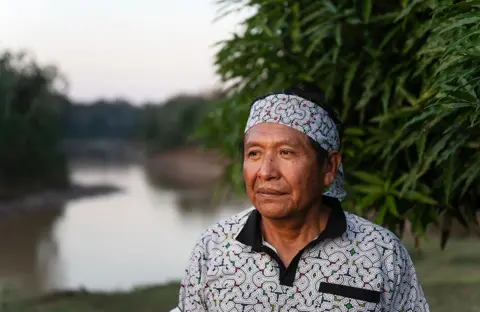
Tomas Anez Dos Santos was laboring in a small glade deep in the of Peru Amazon when he noticed movements coming closer through the dense jungle.
It dawned on him he was encircled, and halted.
“One person positioned, directing with an projectile,” he recalls. “Unexpectedly he noticed of my presence and I commenced to flee.”
He ended up face to face members of the Mashco Piro. Over many years, Tomas—dwelling in the modest village of Nueva Oceania—served as virtually a neighbor to these nomadic individuals, who reject contact with foreigners.
A new document issued by a human rights organization states there are at least 196 of what it calls “uncontacted groups” remaining in the world. The Mashco Piro is considered to be the most numerous. The report states a significant portion of these groups may be eliminated within ten years unless authorities fail to take further actions to defend them.
It argues the most significant dangers stem from logging, mining or exploration for oil. Uncontacted groups are extremely at risk to basic sickness—as such, the study notes a danger is posed by interaction with religious missionaries and online personalities in pursuit of attention.
Lately, members of the tribe have been appearing to Nueva Oceania more and more, as reported by locals.
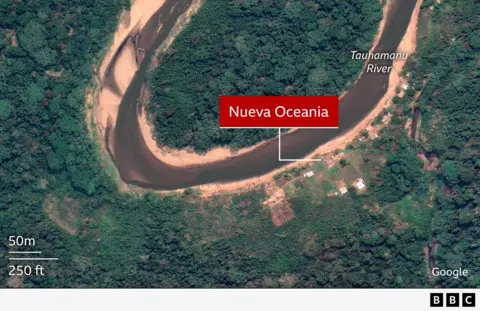
This settlement is a fishermen's community of several clans, perched elevated on the banks of the Tauhamanu waterway in the center of the Peruvian rainforest, a ten-hour journey from the closest settlement by canoe.
The territory is not recognised as a protected reserve for isolated tribes, and timber firms work here.
Tomas reports that, on occasion, the racket of logging machinery can be detected day and night, and the community are seeing their forest damaged and destroyed.
In Nueva Oceania, residents state they are conflicted. They are afraid of the tribal weapons but they also possess strong regard for their “kin” dwelling in the jungle and desire to safeguard them.
“Let them live in their own way, we are unable to alter their way of life. That's why we keep our space,” says Tomas.
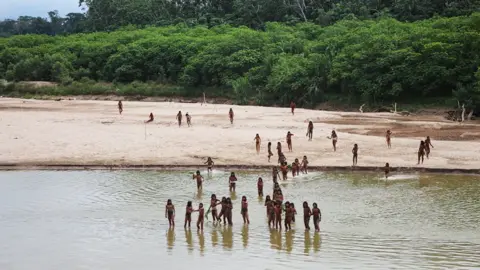
Residents in Nueva Oceania are worried about the damage to the tribe's survival, the danger of aggression and the chance that loggers might expose the Mashco Piro to sicknesses they have no defense to.
While we were in the settlement, the Mashco Piro appeared again. Letitia Rodriguez Lopez, a woman with a two-year-old daughter, was in the woodland collecting produce when she noticed them.
“There were calls, cries from individuals, many of them. As though there was a crowd shouting,” she informed us.
It was the first time she had met the group and she escaped. An hour later, her head was persistently throbbing from fear.
“As operate loggers and companies clearing the forest they are escaping, maybe out of fear and they come in proximity to us,” she said. “We don't know how they will behave to us. This is what terrifies me.”
Recently, two loggers were confronted by the group while fishing. A single person was hit by an projectile to the gut. He lived, but the other person was located lifeless days later with several injuries in his body.
The Peruvian government follows a strategy of non-contact with secluded communities, establishing it as prohibited to commence contact with them.
The strategy began in a nearby nation after decades of lobbying by tribal advocacy organizations, who observed that first contact with secluded communities lead to whole populations being wiped out by sickness, poverty and starvation.
During the 1980s, when the Nahau tribe in the country made initial contact with the outside world, 50% of their people died within a few years. A decade later, the Muruhanua people faced the similar destiny.
“Isolated indigenous peoples are very susceptible—epidemiologically, any interaction could transmit diseases, and even the most common illnesses might decimate them,” says a representative from a Peruvian indigenous rights group. “Culturally too, any interaction or interference may be very harmful to their way of life and health as a group.”
For local residents of {


